
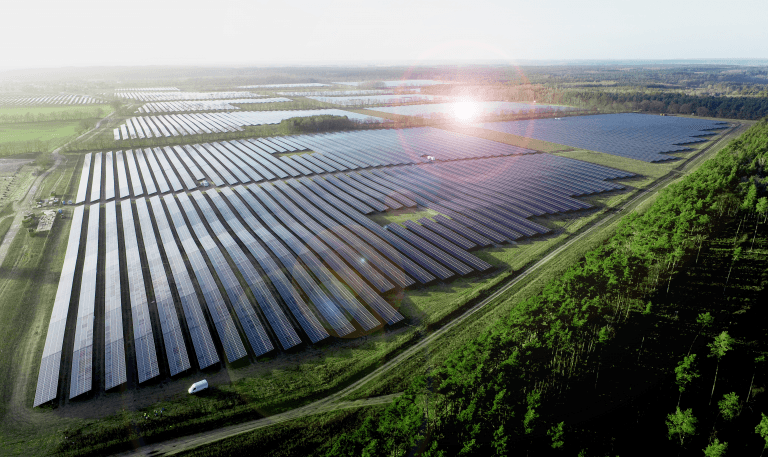
Solar farms have become an integral part of the UK’s renewable energy landscape, playing a crucial role in the transition towards a more sustainable and self-sufficient energy system. With the government’s ambitious goals to increase solar capacity, the UK is witnessing significant growth in both the number and size of solar farms across the country.
Expansion and Current Capacity
As of 2024, the UK has a cumulative installed solar capacity of around 15.8 GW, with an ambitious target to reach 70 GW by 2035. This expansion is driven by large-scale solar farms, with new projects regularly being approved. For instance, the Labour government has recently approved three major solar farms in East England, which together will contribute an additional 1.35 GW of power, sufficient to supply approximately 400,000 homes (Electrek).
Solar farms are strategically placed to maximize efficiency, with many located in the sunnier regions of South East and South West England. These regions account for about 43% of the ground-mounted installations. However, solar farms are also spreading to other parts of the country, including the largest solar farm in Wales, Llanwern, which has a capacity of 75 MW (House of Commons Library) (Sunsave Energy).
Benefits of Solar Farms
Solar farms offer multiple benefits, both environmentally and economically. They provide a clean, renewable source of energy that significantly reduces carbon emissions. Additionally, the integration of battery storage systems, like the 99MWh system at the Larks Green Solar Farm, allows excess energy to be stored and used during peak periods, enhancing grid stability and efficiency (Sunsave Energy).
Moreover, solar farms can support local economies by creating jobs and contributing to energy security, reducing reliance on imported fossil fuels. They also present opportunities for dual land use, such as combining solar power generation with agricultural activities like sheep grazing, which helps in maintaining the land’s agricultural productivity (House of Commons Library).
Challenges and Future Outlook
Despite the benefits, there are challenges to the expansion of solar farms in the UK. Planning and regulatory barriers, particularly concerning land use and grid connectivity, have slowed down the deployment of new projects. Large solar farms (above 50 MW) require approval from the Secretary of State for Energy Security and Net Zero, which can be a lengthy process (House of Commons Library).
Additionally, the availability of suitable land remains a contentious issue, with debates around the use of agricultural land for solar farms. However, the government’s revised national policy statements now prioritize the development of low-carbon infrastructure, which should streamline the approval process for future projects (House of Commons Library).
Looking forward, the UK is set to see a significant increase in solar farm capacity, with projects like the 373 MW Project Fortress in Kent and the potential 600 MW Cottam Solar Project in Lincolnshire and Nottinghamshire expected to break ground soon. These developments will likely solidify solar farms’ role in the UK’s energy mix, contributing to the country’s net-zero goals and energy independence (Sunsave Energy).
In conclusion, solar farms are a vital component of the UK’s renewable energy strategy. While there are challenges to overcome, the continued expansion and technological advancements in the sector promise a bright future for solar energy in the UK.